Starting weaning: tips for a stress-free transition
If your baby is showing more interest in your food than in their milk, it might be time to start weaning. What are the key signs of readiness, how do you approach the transition, and what do you need to keep in mind when introducing solid foods? Here are our top tips.
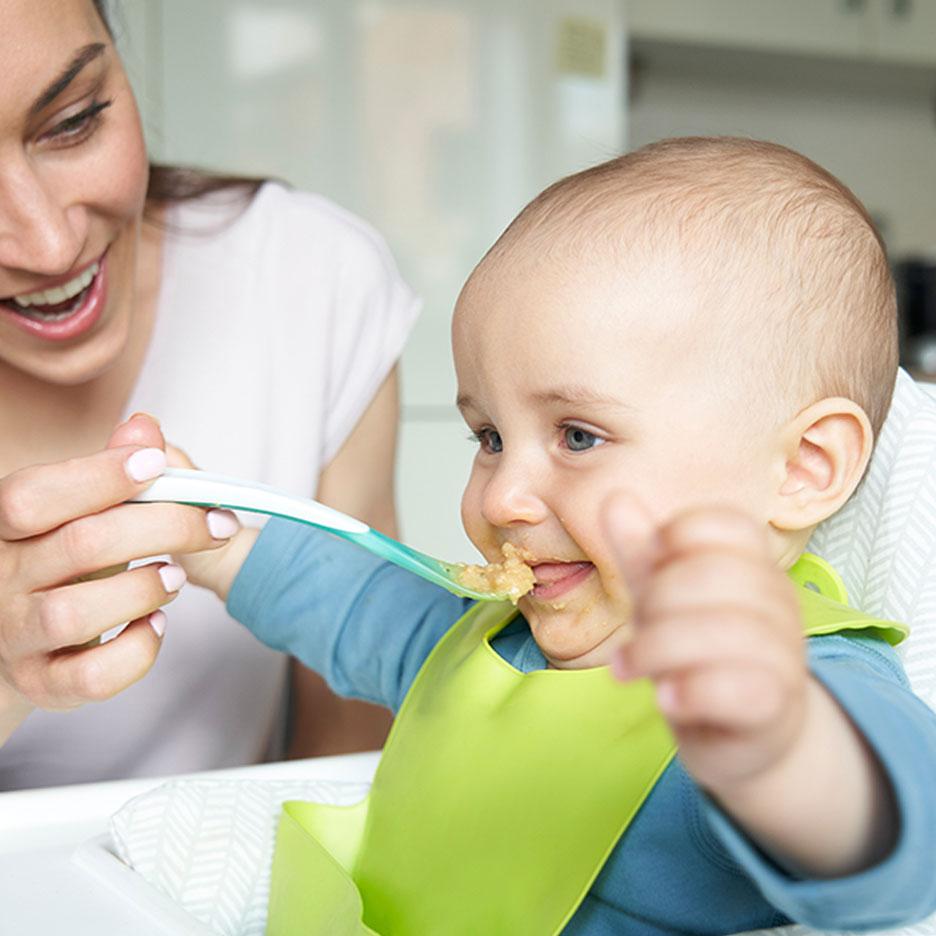
Signs of readiness for weaning: Ready for the first spoonful?
Your baby will give you clear signs when they are ready to start weaning. Look out for these physical signs of readiness:
- The tongue-thrust reflex has diminished, allowing your baby to swallow food safely.
- Eyes, mouth and hands are more coordinated, so your baby reaches out with purpose.
- Your baby can sit upright with support and hold their head up independently.
- They watch you while you eat and show an interest in food.
- They imitate your chewing movements and put fingers or food into their mouth.
Important: Don't stress! Every child develops at their own pace. Some babies are ready for weaning from 5 months, while others only show readiness signs from 7 months.
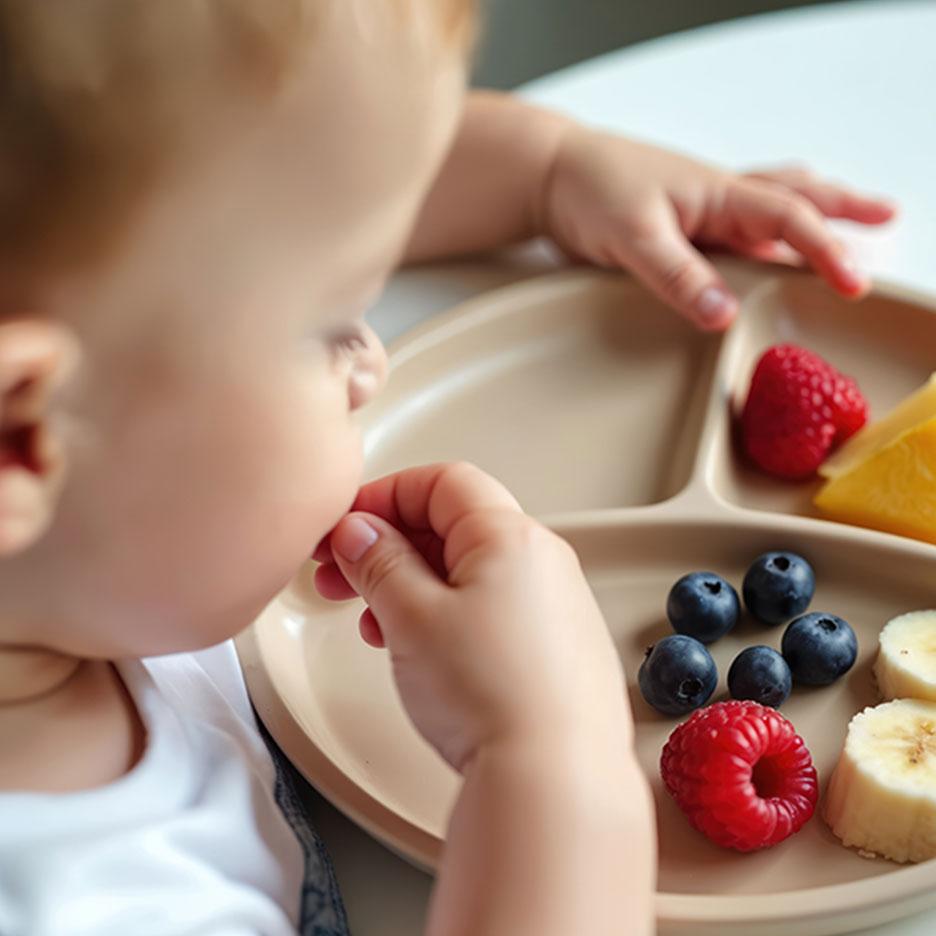
Purees vs. Baby-led Weaning (BLW): Which is better?
You can introduce weaning using traditional purees following a fixed plan or offer your child age-appropriate solid food that they feed themselves. Neither the puree method nor Baby-led Weaning (BLW) is inherently better or worse.
Traditional Purees
Finely pureed baby food ✓ Spoon feeding ✓ Gradual introduction of different ingredient combinations following a set plan ✓
+ Particularly low choking risk
+ Calorie and nutrient intake can be precisely controlled
+ Less stress with meal planning, feeding and clean-up
+ Great for babies who cannot yet grasp or chew well
− Less variety of foods and flavours
− Fewer developmental stimuli for your child
− Less integration into family mealtimes
Baby-led Weaning (BLW)
Soft, easy-to-grasp finger foods ✓ Self-feeding ✓ Introduced based on your instinct and individual experience ✓
+ Promotes child development (fine motor skills, coordination, senses)
+ Wide variety of foods and flavours possible
+ Fully integrates your baby into daily family mealtimes
+ Baby decides the amount and pace of eating for themselves
− Nutrient and calorie intake is harder to track
− More effort required for preparation and cleaning up
− Requires more supervision during shared mealtimes
Unser Tipp: Viele Eltern setzen auf einen Kombi-Ansatz – also etwa morgens Brei, abends BLW und natürlich weiterhin Milchnahrung als Hauptbestandteil. Mit dieser Mischung kannst du schnell herausfinden, welche Beikost-Methode am besten zu eurer Familie passt.
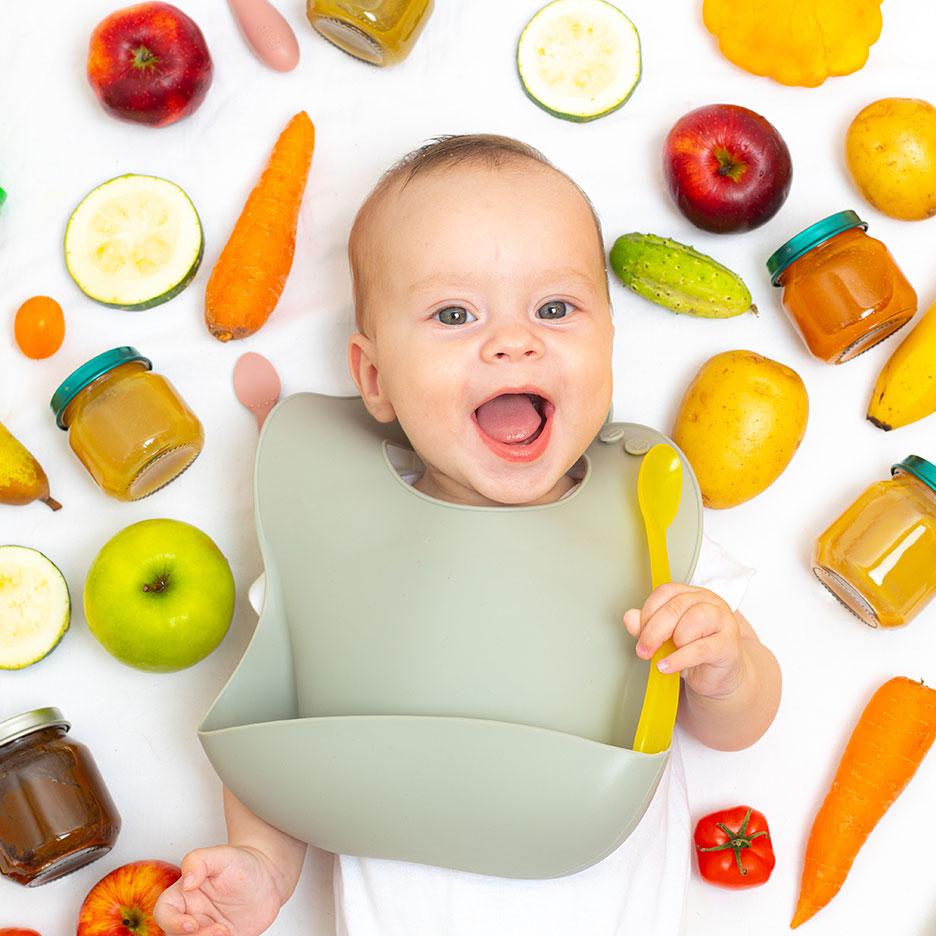
Weaning recipes: Tasty (and not just) in autumn!
Whether purees or BLW: seasonal and local ingredients are the best choice when starting weaning. It helps your baby learn to eat in harmony with the natural rhythm of the seasons right from the start. Autumn is peak season for many baby food favourites. They are packed with flavour and essential nutrients while being gentle on your baby's tummy:
- Parsnip with a mild, nutty flavour and easy to digest
- Pumpkin gently sweet and highly digestible
- Sweet potato packed with nutrients and a baby-friendly taste
- Carrot vibrant in colour with a great nutrient combination
- Apple a mildly sweet introduction to the world of fruit
Tip: For baby's first BLW meals, cut vegetables into finger-sized sticks that stick out easily from their fist. Ideally, steam the food until soft. Do not use any salt or sugar.
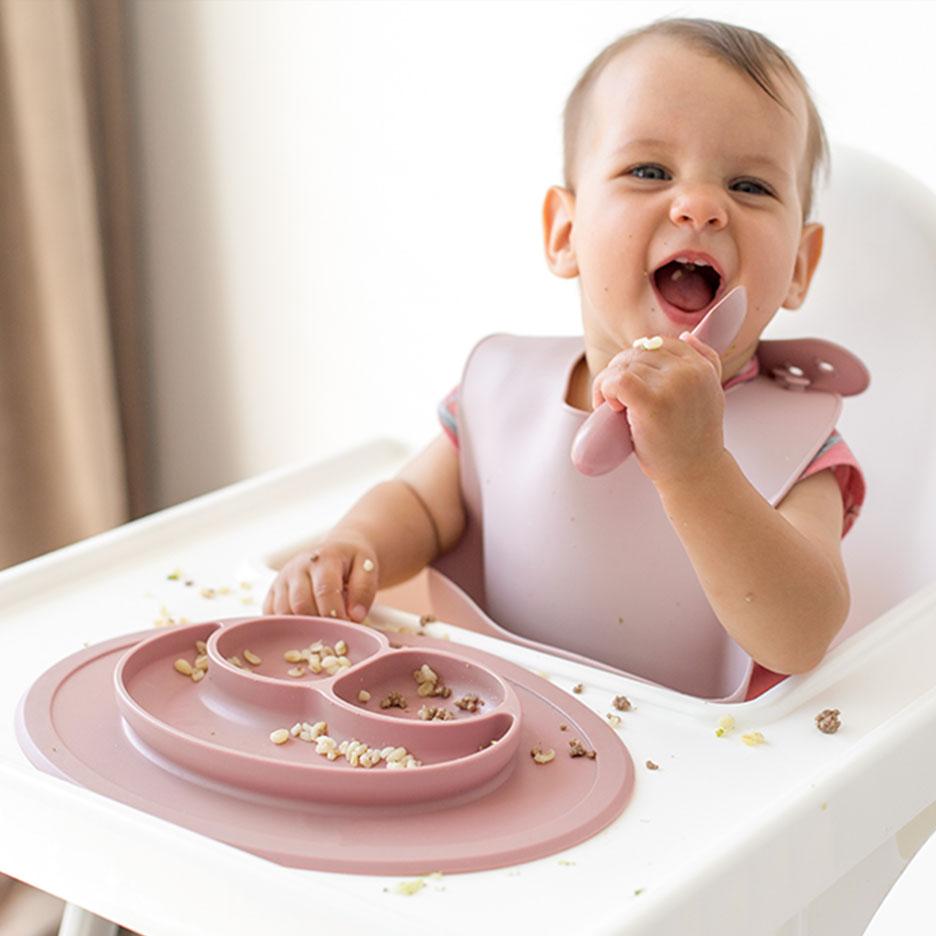
Essential starter kit for weaning
When your child takes their seat at the dining table, a new chapter begins. To make mealtimes enjoyable and stress-free for everyone, here are the essential items to go alongside the right food:
- Ergonomic high chair suited to their stage of development
- Wipeable bib with catch tray
- Baby-friendly tableware made from non-slip and shatterproof silicone
- Special feeding spoon made from soft material with a child-friendly grip
- Trainer cup with baby-friendly ergonomics