Developmental milestones: How your baby grows up safely
From rolling over to crawling, from pulling themselves up to walking: a young child's urge to move knows no bounds. We explain how you can support these developmental milestones, encourage them with the right early support, and ensure maximum safety every step of the way.
 AI
Practising crawling, learning to walk: how children discover the world
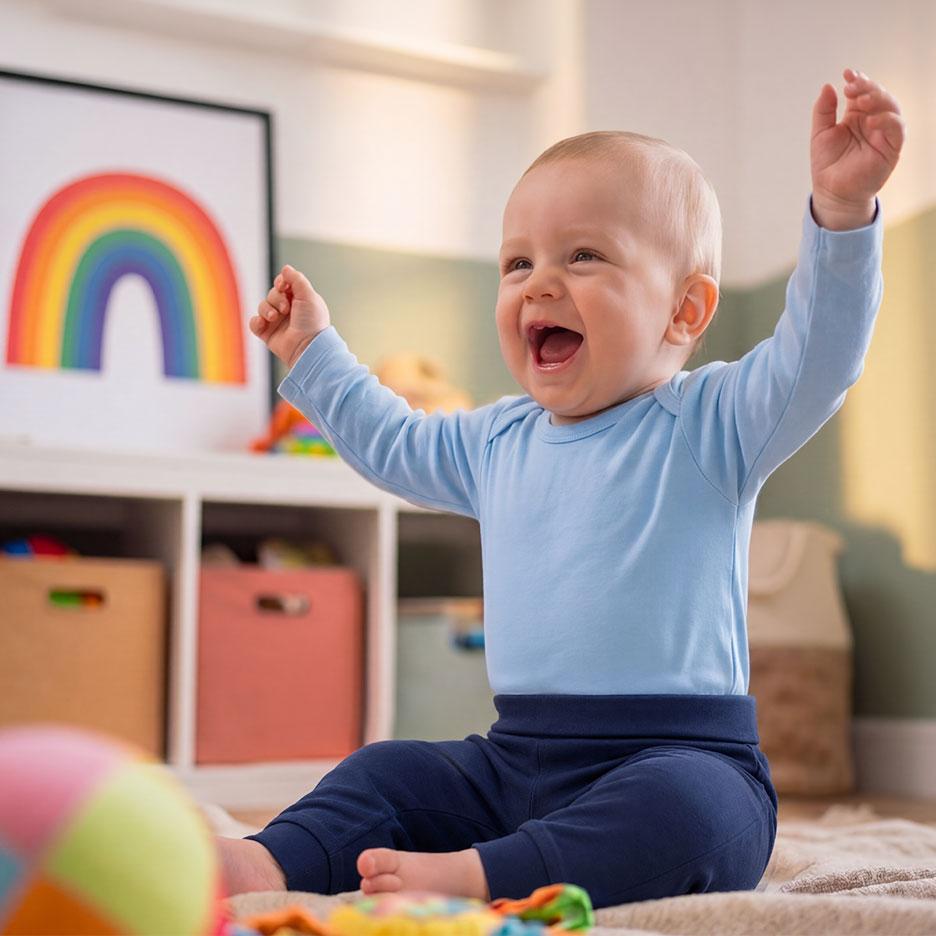
As babies become mobile, they gain control over their bodies step by step: uncontrolled reflexes turn into targeted muscle movements, and blurry grey-toned images become colours, outlines and three-dimensional impressions.
With every stage of development, your child's curiosity about their surroundings grows – along with the urge to explore them. This drive is so strong that it fuels your baby's motor development following a typical pattern:
- 1
Briefly lifting and holding the head
(from approx. 1 month)
- 2
Castors and Supports
(from approx. 4 months)
- 3
Sitting & Crawling
(from approx. 6 months)
- 4
Pull up and shimmy across
(from approx. 9 months)
- 5
Learning to walk
When your child reaches specific developmental milestones is a very individual matter. Before they start, however, your baby will often give you clear signs – for example, by starting to rock back and forth while lying on their back.
Important: Never leave your child unattended on their journey of discovery, and always ensure that wooden toys and accessories are in full working order.
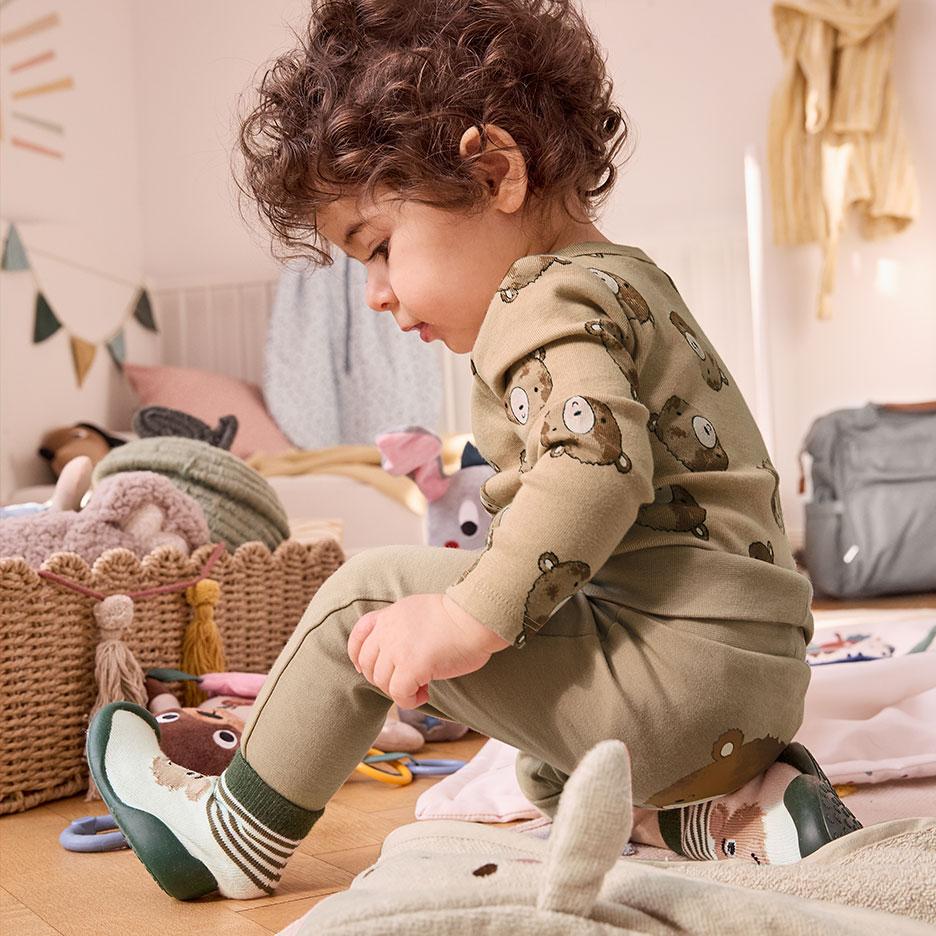
Shoes and clothing for the next developmental milestone
The right baby clothing and fitting footwear are essential for early childhood development. It's all about achieving the perfect mix of freedom of movement and safety:
- Crawling shoes and pre-walkers protect baby feet from the elements and help them get around more easily. As a general rule, your child should walk barefoot as often as possible. Suitable footwear mimics this feeling very closely while providing added stability.
- Anti-slip socks or slipper socks won't hold back your child's urge to move, but they will prevent many a slip while walking. Especially useful on cold floors!
- From the first vest to baby trousers, baby clothing should be extremely stretchy and allow plenty of room, particularly around the hips and knees.
 AI
Baby-proofing made easy: 10 quick tips for a safe home
- Fit corner and edge protectors to furniture
- Store small parts that could be swallowed out of reach
- Secure vases or picture frames to prevent them tipping over
- Remove poisonous houseplants
- Fit socket covers to (unused) plug sockets
- Route loose cables out of reach
- Fix furniture at risk of tipping to the wall using brackets
- Install drawer locks
- Secure doors and stairs with safety gates
- Fit finger pinch guards to windows
Top tip: Not sure if you've thought of everything? Try the crawl test! Navigate your home on all fours and see your surroundings through a baby's eyes. Remember: it's better to over-babyproof than under-babyproof.