Warming Up and Defrosting in the Microwave: Tips for Quick Cooking
Fancy a delicious meal but don't want the long wait? Head straight for the microwave! This speedy kitchen appliance is the ideal tool for quick recipes. What is important when warming up and defrosting in the microwave? Here are the ultimate kitchen hacks.
Defrosting or reheating in the microwave: The most important functions
You can use any microwave to defrost or reheat, but some make it particularly easy for you. Thanks to various functions, they can sometimes even replace the oven, grill or pizza oven!
 Defrost function
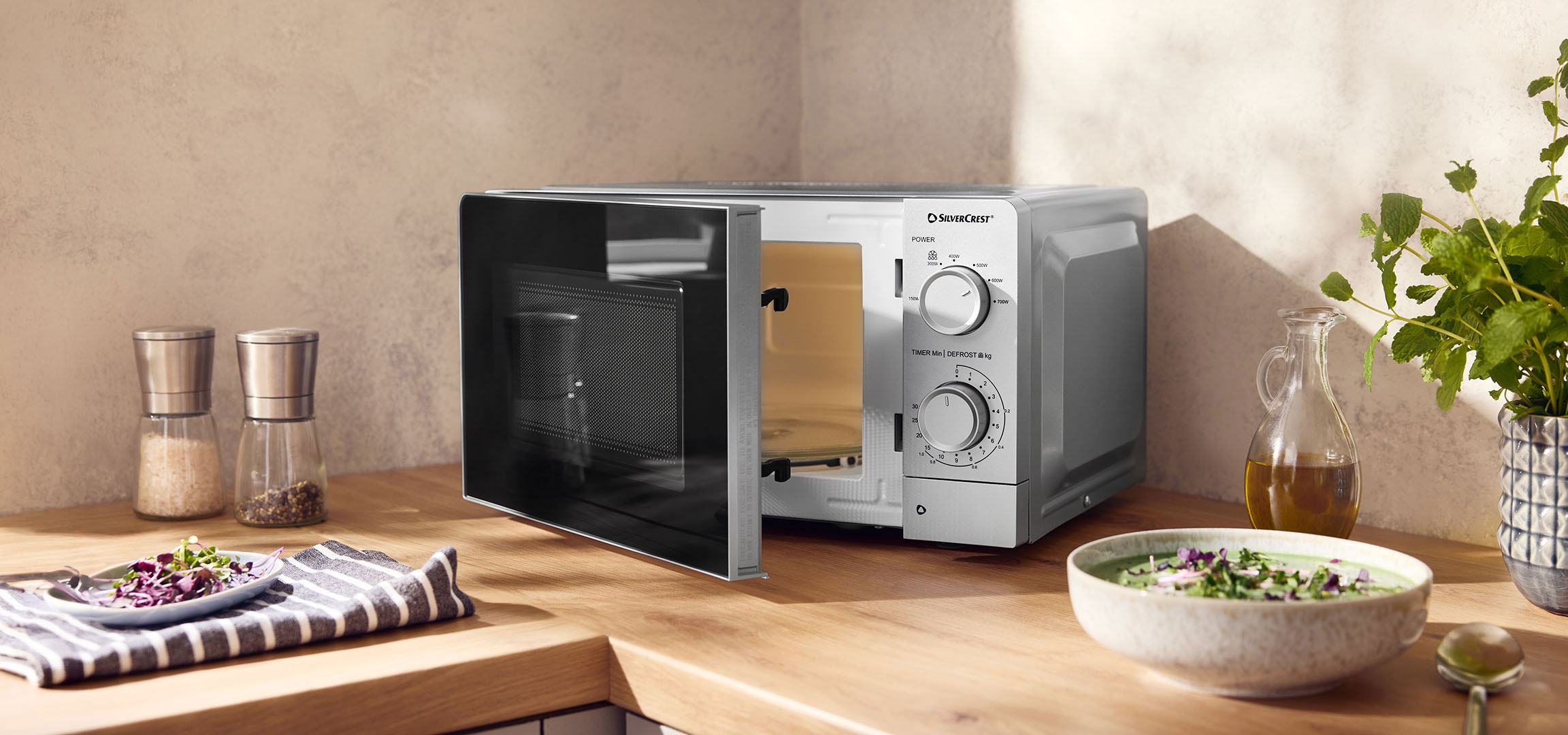
The defrost function reduces the appliance's power and releases it in intervals. This allows you, for example, to safely defrost minced meat in the microwave.
 Baking function, fan oven, grill
Combination appliances have additional heating elements that equip your microwave with a baking function, convection heat or even a grill.
 Standard function
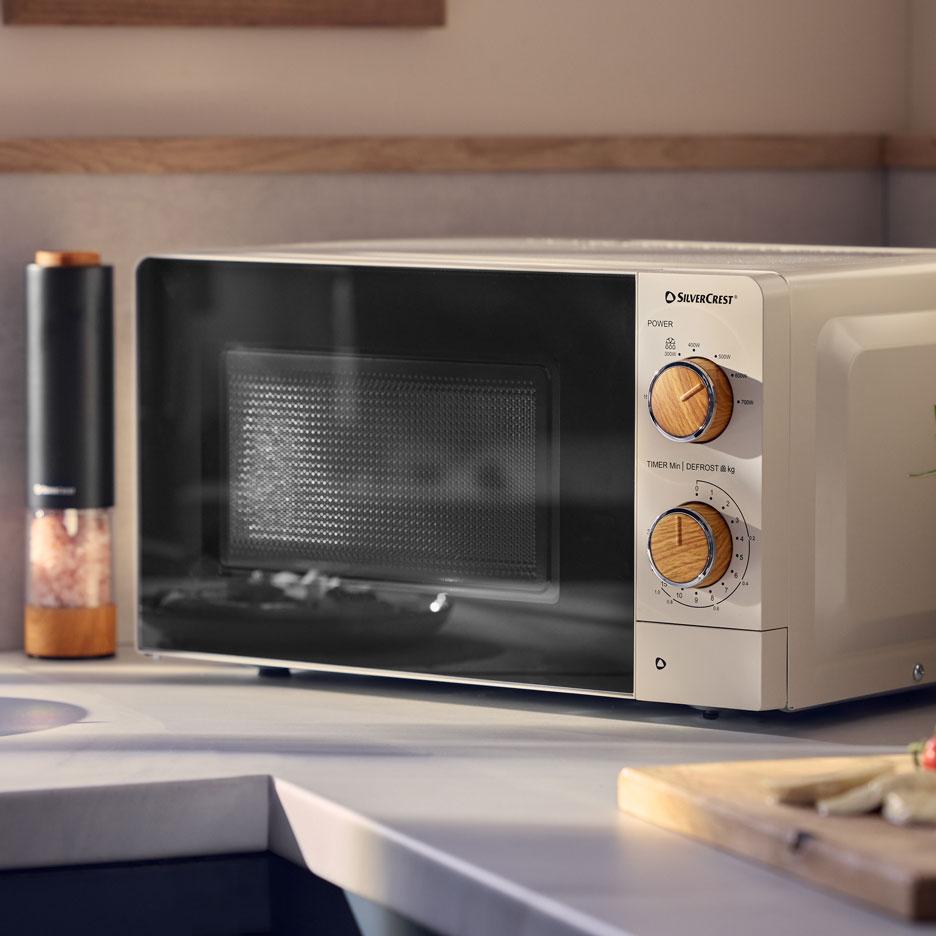
With a standard function, you can manually set the wattage at which the appliance operates. For defrosting and reheating, the rule is "low and slow."
Reheating food in the microwave
You should only reheat pre-cooked food in the microwave at a low power setting. 400 to 600 watts is sufficient. Cover the food to prevent it from drying out, unless you are reheating breaded items. In general, follow these guidelines for time and power:
- Soup (1 plate): 2 to 3 minutes at 600 watts
- Pasta/rice with sauce (1 plate): 1 to 2 minutes at 600 watts, then 5 minutes at 360 watts
- Meat/fish (200 g): 3 to 4 minutes at 360 watts
- Vegetables (500 g): 1 minute at 600 watts, then 5 minutes at 360 watts
- Complete meal (meat, vegetables, potatoes): 1 minute at 600 watts, then 5 minutes at 360 watts
5 golden rules for reheating food in the microwave
- Leave the centre of the plate empty. Microwaves heat from the outside in, so a ring shape ensures more even and faster heating.
- Add a splash of water to rice or pasta. This stops them from drying out when heating.
- Do not use Metal. Only use microwave-safe dishes, such as glass.
- Stir halfway through the set time. Give sauces or soups a quick stir to help distribute the heat more evenly.
- Let it stand after heating. Allowing your food to rest in the microwave for a short while after heating helps the heat to distribute fully and evenly.
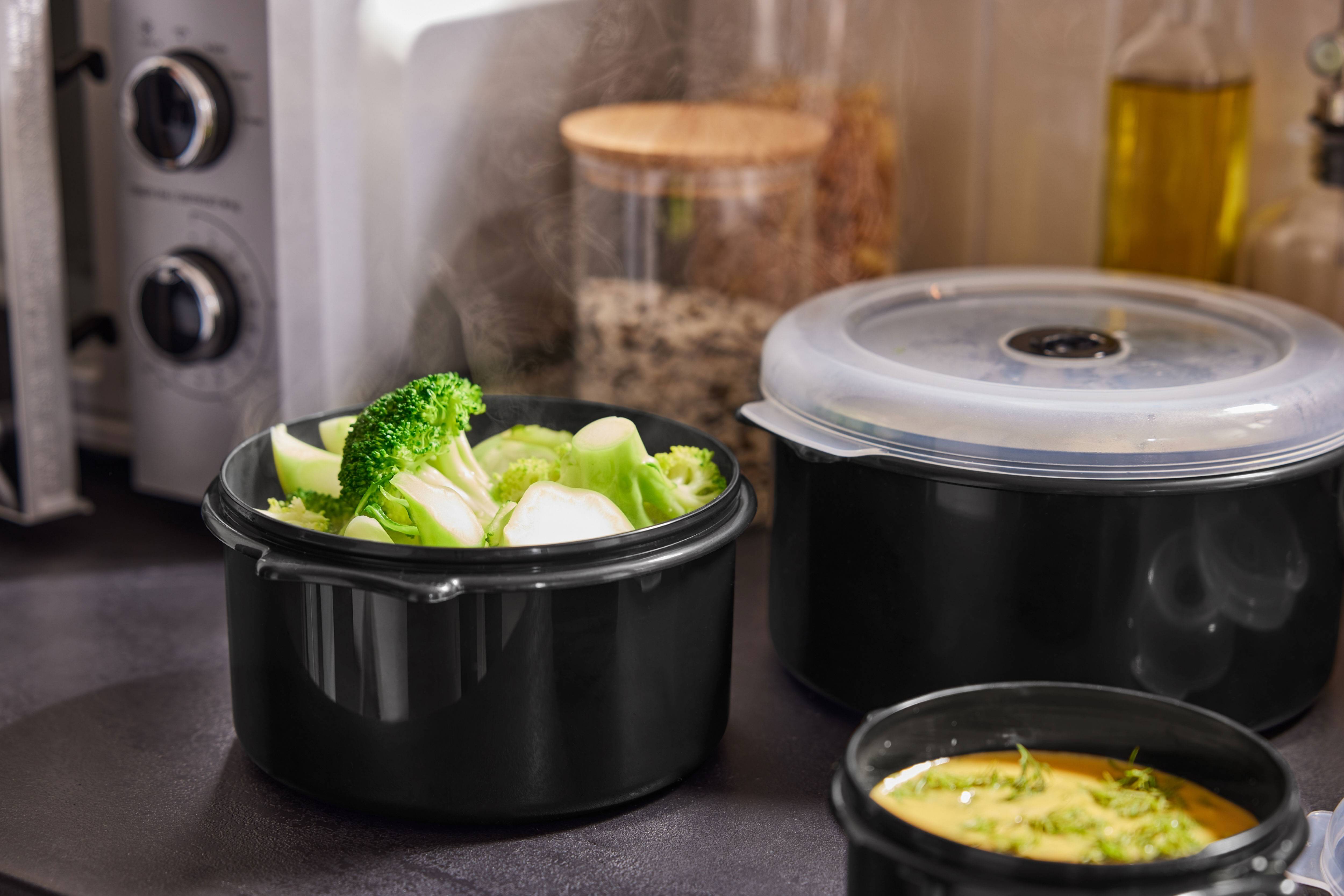
Defrosting in the microwave
Defrosting in the microwave is a quick and easy alternative to long waiting times. However, to ensure the taste and texture are just right, there are a few things you should keep in mind.
Opt for a very low power setting of 180 to 240 watts. The food must not cook. If your microwave does not have a defrost programme, turn the power down manually. After defrosting in the microwave, let the food rest for around 10 minutes. This allows it to defrost completely. Again, only use microwave-safe dishes.
Defrosting times
Defrosting times depend primarily on the nature of the food. As a general rule, the higher the water content and the thicker the food, the longer the defrosting time. At a power level of 200 watts, the following guidelines apply:
Food | Weight/quantity | Defrosting time |
|---|---|---|
Bread and rolls | 300 to 1,000 g | 2 to 15 minutes |
Fruit and vegetables | 250 to 500 g | 4 to 12 minutes |
Poultry | 500 to 1,500 g | 10 to 30 minutes |
Fish | 300 to 500 g | 5 to 10 minutes |
Meat and cold meats | 500 to 1,000 g | 10 to 25 minutes |
5 golden rules for defrosting in the microwave
- Wrap bread rolls or bread in a damp cloth. This keeps them soft and fluffy on the inside.
- Turn thick foods like schnitzels halfway through, and stir soups regularly.
- Place meat or poultry on an upturned plate, placed inside another plate. This "pedestal" allows excess water to drain away.
- Cook meat or fish immediately after defrosting. Otherwise, bacteria will multiply quickly.
- Portion the food before defrosting. This allows it to heat up faster and more evenly.
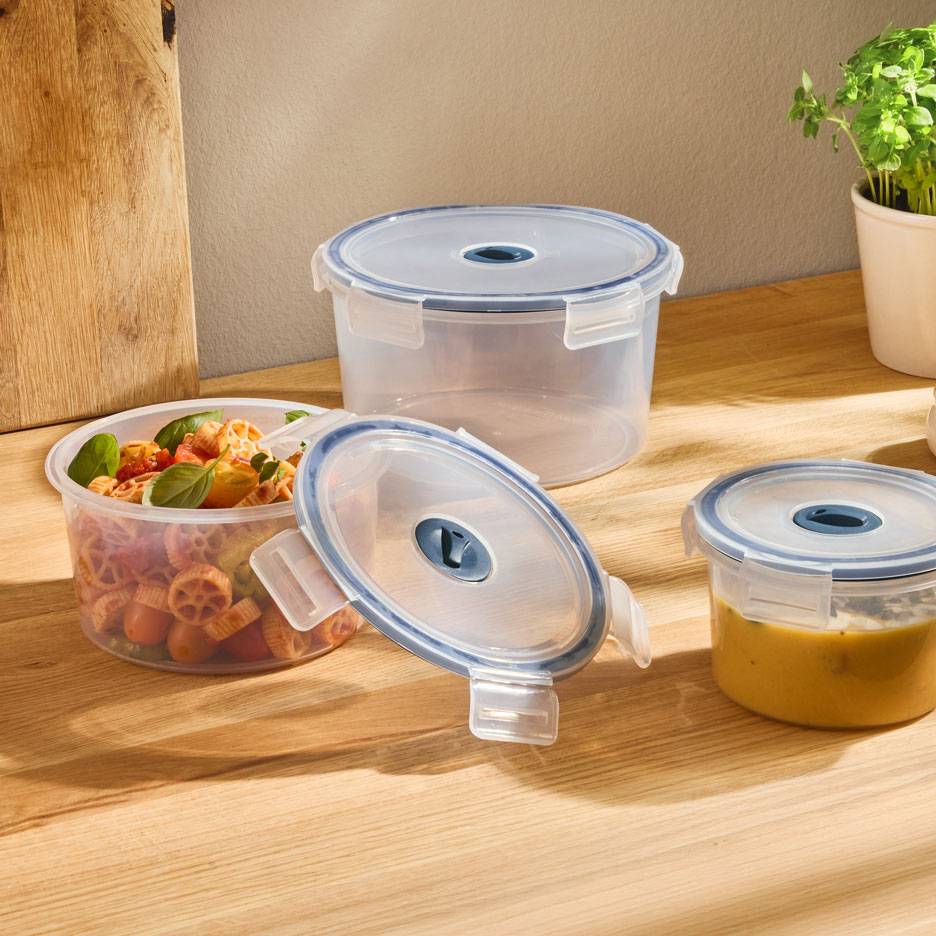
What should not go in the microwave?
Whether heating, defrosting or cooking, some foods have no place in the microwave. These include:
- Raw fish or raw meat (for cooking)
- Moist foods with skin or peel, such as eggs, tomatoes, grapes, etc.
- Fats or oils
- High-proof alcohol
- Pure water
When it comes to materials for your cookware, metal, paper, many plastics and melamine are a no-go. Opt for heat-resistant glass, glazed stoneware or tableware that is explicitly suitable for microwaves!