How to find the right hedge trimmer
Whether manual hedge trimmers, electric, cordless or petrol hedge trimmers, there is a suitable model for every hedge in the garden and every requirement. This guide shows you what to look out for when buying.
Hedge trimmers: The types at a glance
Whoever wants to buy a hedge trimmer has the choice between different models and designs. The first decision concerns the choice of drive. Both manual hedge trimmers and models with an electric drive, battery or petrol engine have their advantages and disadvantages.
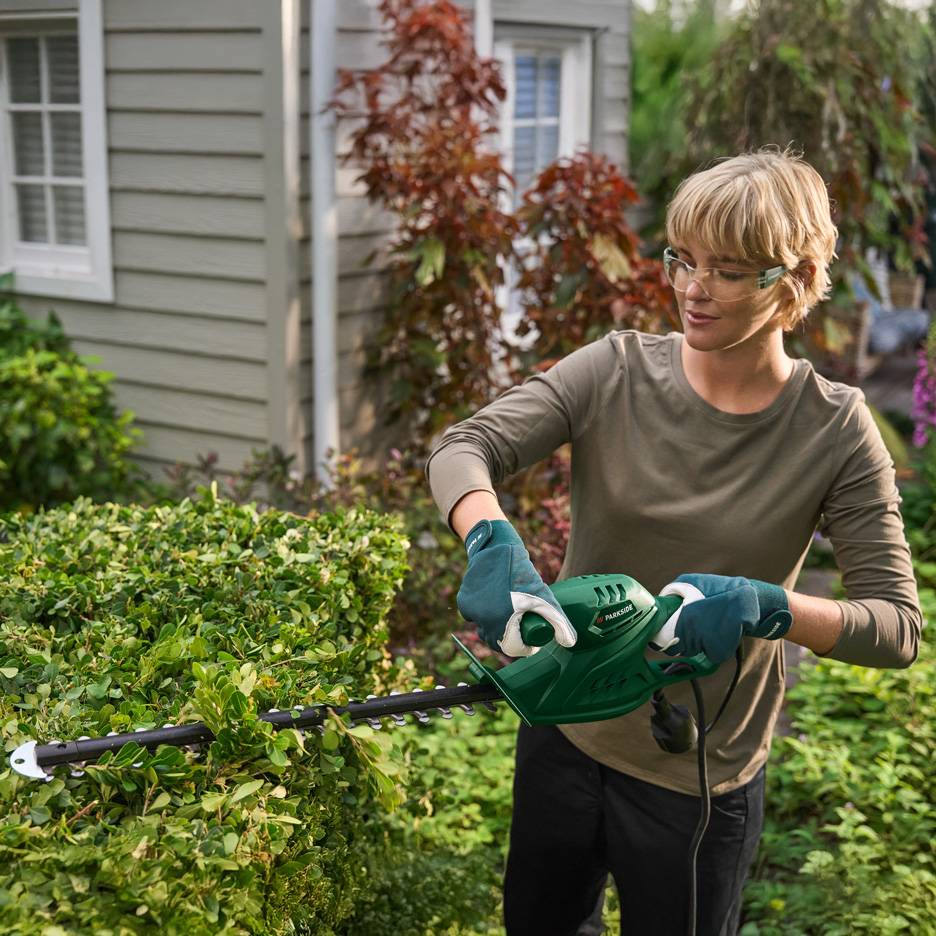
Electric hedge trimmers
Electric hedge trimmers are connected to a power socket by cable. This means that even large areas can be worked on without a break. However, the cable connection restricts freedom of movement. In large gardens or if there is no power socket nearby, a cable reel or other extensions must be used.
Advantages:
- Unlimited running time
- Low weight
- Great value
Disadvantages:
- Limited freedom of movement
- Power connection required on site
- Danger of cutting the cable
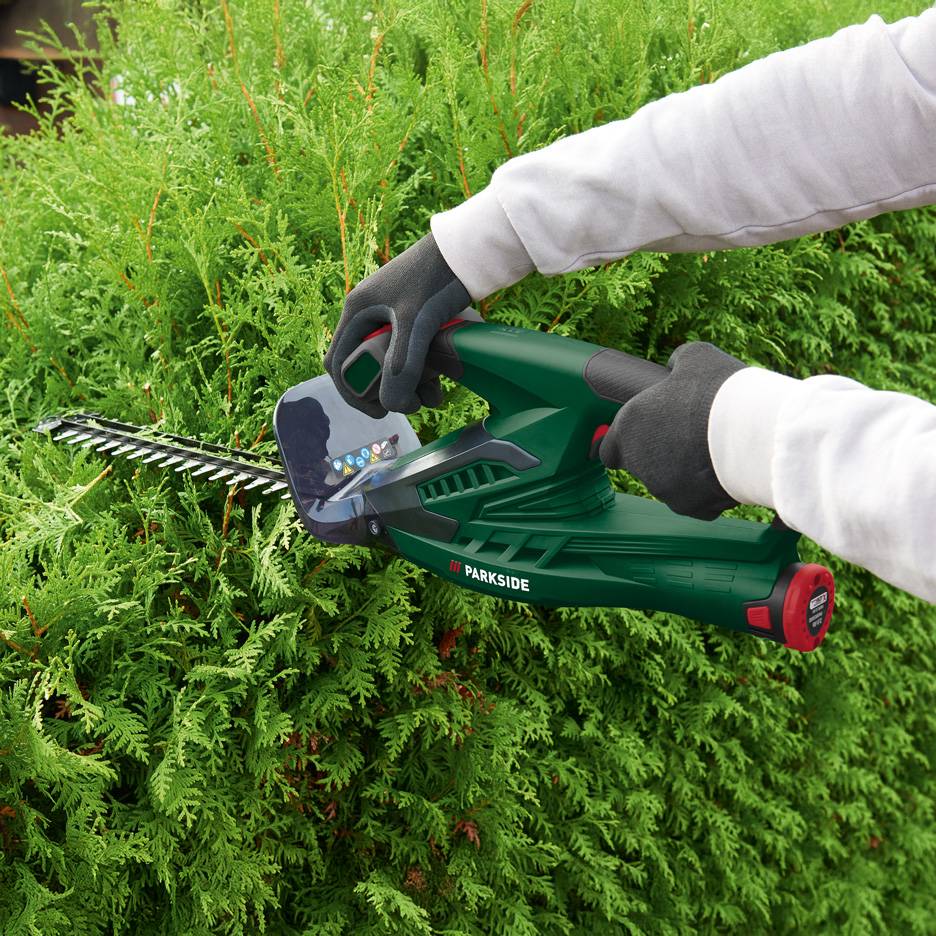
Cordless hedge trimmers
For large gardens or properties without a power supply, it is advisable to purchase a cordless hedge trimmer. Depending on the quality of the battery, however, breaks for recharging must be planned for large areas. On the other hand, cordless hedge trimmers impress with their low noise level.
Advantages:
- Quiet
- High freedom of movement
Disadvantages:
- No power connection required on site
- Priceworthy
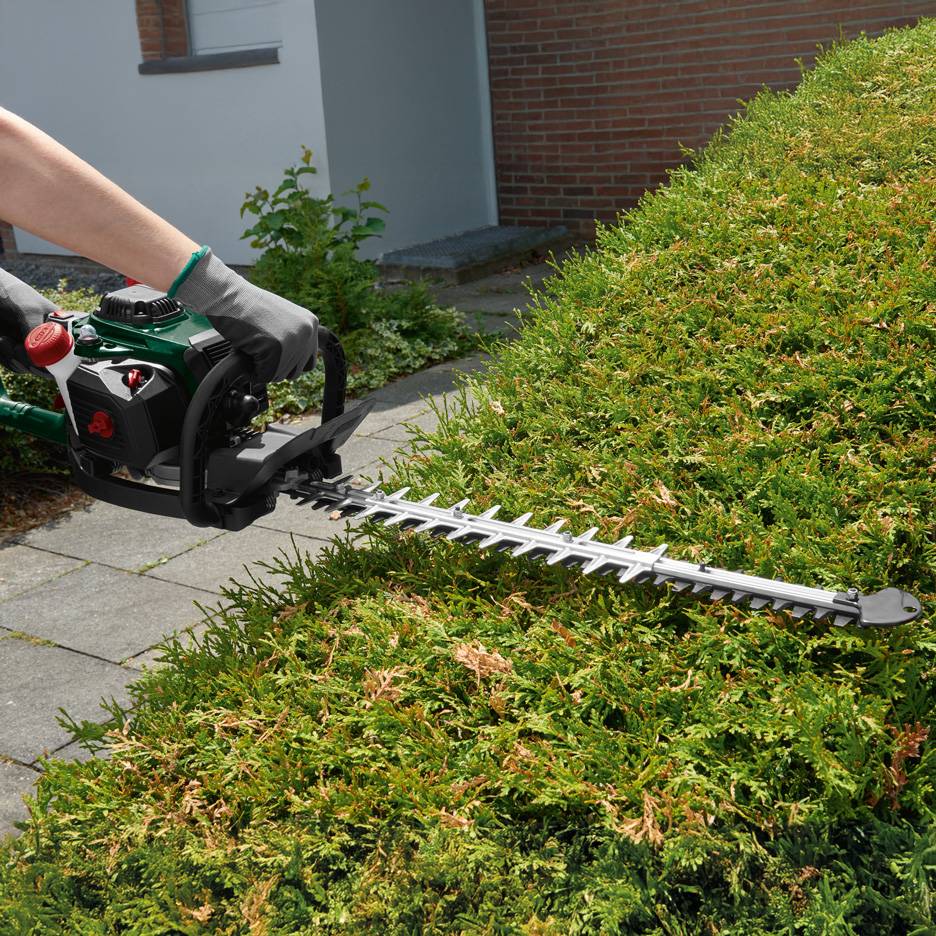
Petrol hedge trimmers
Hedge trimmers with a petrol engine are ideal for use on remote properties without a power source nearby or particularly large areas. Garden maintenance professionals also use petrol hedge trimmers. These hedge trimmers offer high performance and power that can cut through thicker branches.
Advantages:
- High freedom of movement
- No power connection required on site
- High performance
Disadvantages:
- High weight
- Loud
- High maintenance requirements
- Costly
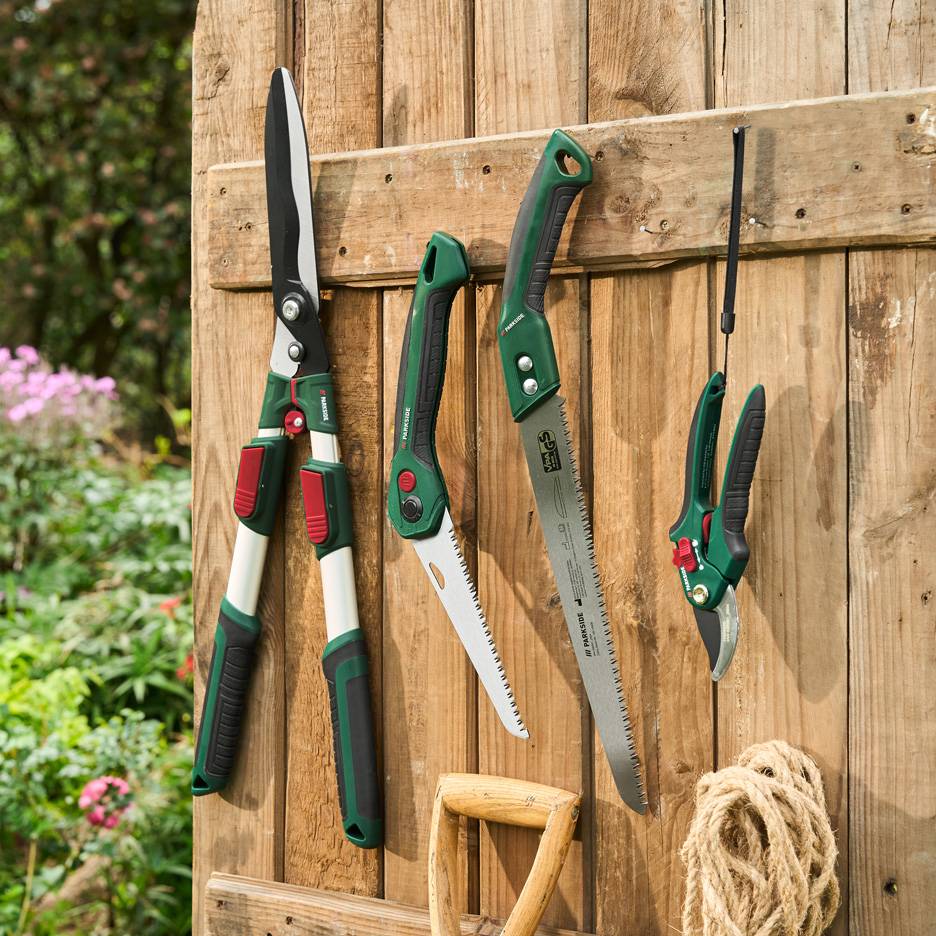
Manual hedge trimmers
Manual hedge trimmers are particularly suitable for corners of the hedge that are difficult to access. For short hedges or low-maintenance hedges this is a great option. For larger areas and frequent cutting, a motorised hedge trimmer should be used, otherwise gardening will be very time-consuming and tedious.
Advantages:
- Inexpensive
- No maintenance required
Disadvantages:
- Physically strenuous
- Not suitable for large areas
- Not suitable for thicker branches and twigs
Criteria when buying a hedge trimmer
Once you know what type of hedge trimmer you want to buy, cutting length, performance and ease of use should be considered carefully before purchasing to ensure that there are no nasty surprises when working.
Cutting length
The size of the hedge and the type of cut determine the required cutting length - i.e. how much area can be trimmed with one cut. The cutting length should not be confused with the blade length. The blade length indicates the overall length of the shears. As a general rule, the longer the cutting length, the heavier the hedge trimmer and the more difficult it is to cut accurately.
Power
The power of the hedge trimmer determines which branches and twigs can be cut through and which cannot. The thicker the branches, the higher the power should be. So if you rarely trim your hedge and therefore have to deal with more robust branches, you should look for a powerful motor. The weaker models start at around 400 watts; for more power, you should choose a hedge trimmer with 750 watts for more ease of use. Working with hedge trimmers can quickly become strenuous. This makes a high level of operating comfort all the more important. The following questions should be answered before buying:
Can I work with the shears overhead? For left-handers: Are the handles and buttons arranged symmetrically? Does the hedge trimmer have an anti-vibration system?
Tip: Use a telescopic hedge trimmer for high hedges The heavy weight of the hedge trimmer makes working on a ladder dangerous. Hedges up to 3 metres high can be trimmed without the need for a ladder.
Safe handling of hedge trimmers
The sharp, fast blades of hedge trimmers are not without danger. A two-hand switch (safety circuit) prevents unintentional switching on. An automatic blade stop prevents the hedge trimmer from overrunning. An overload protection switches the motor off if the load becomes too great - for example when cutting thick branches. A hand protection shield protects against flying branches.
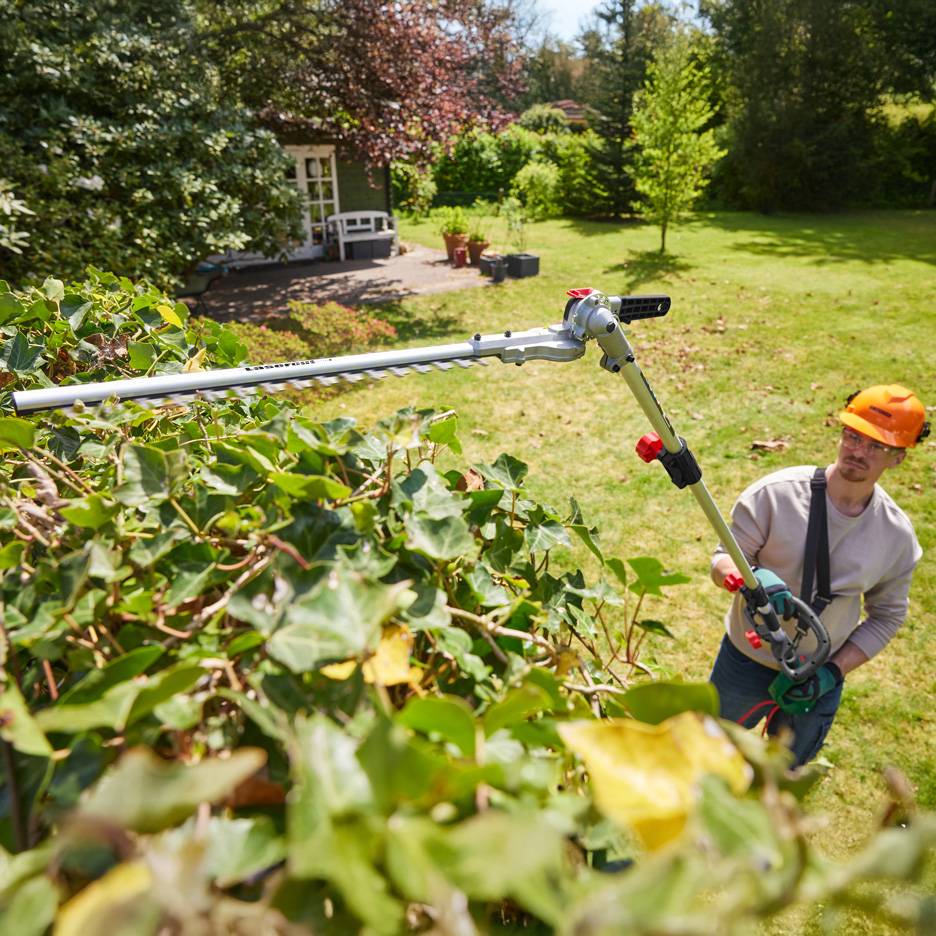
Required protective clothing
In addition to the safety features, the following protective equipment should be worn to work safely with hedge trimmers:
- Safety goggles
- Gardening gloves
- Ear protection (for petrol hedge trimmers)
Working with a chainsaw has several disadvantages. Firstly, the large dimensions mean that precise cutting is not possible. Secondly, the chainsaw is not suitable for work above chest height - the risk of injury is too high. However, there are 2-in-1 devices that combine hedge trimmers and chainsaws and whose dimensions and weight are adapted accordingly.